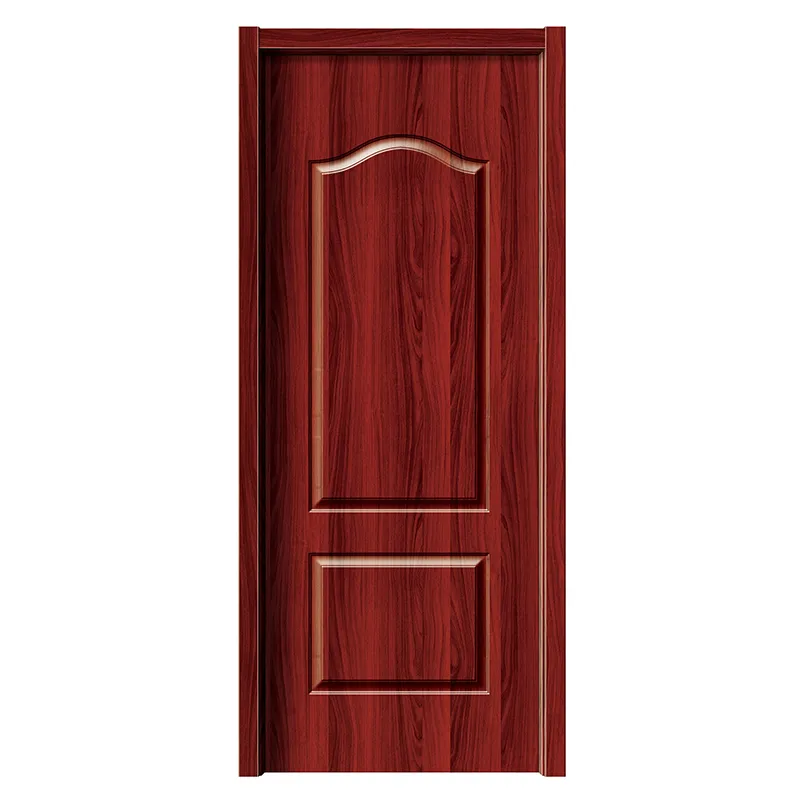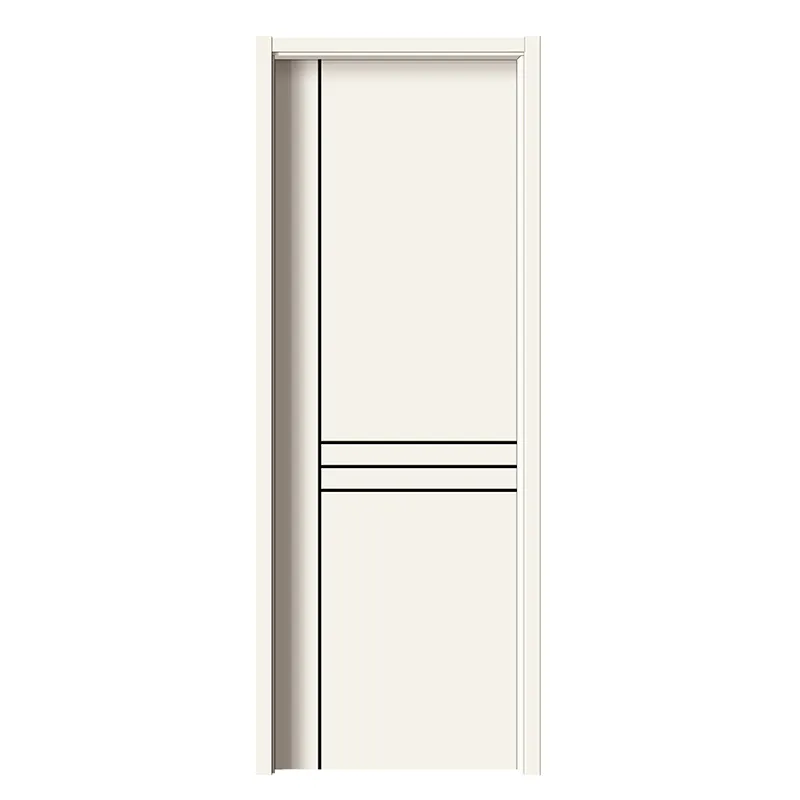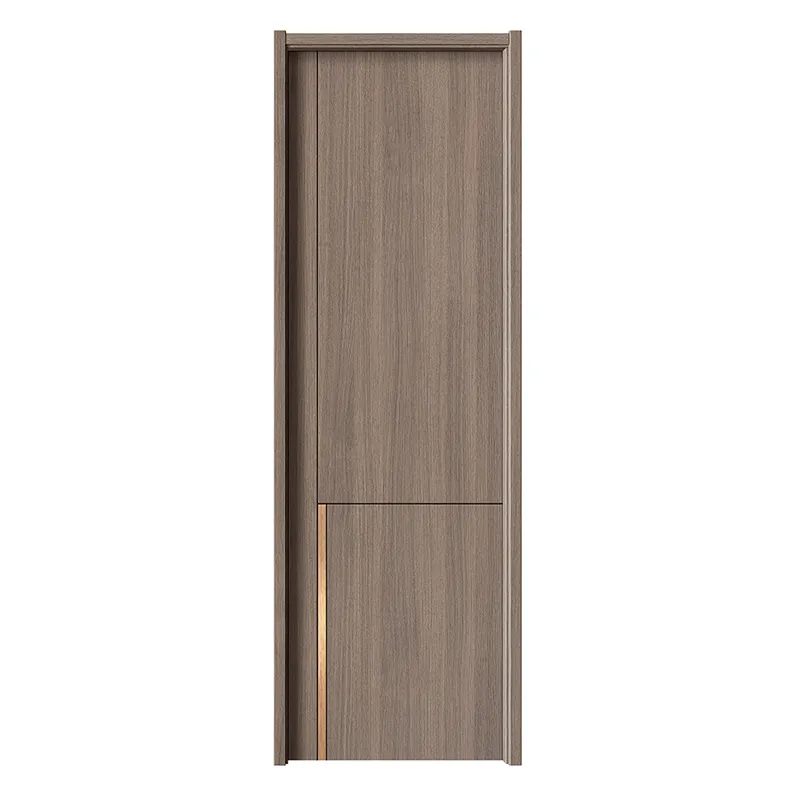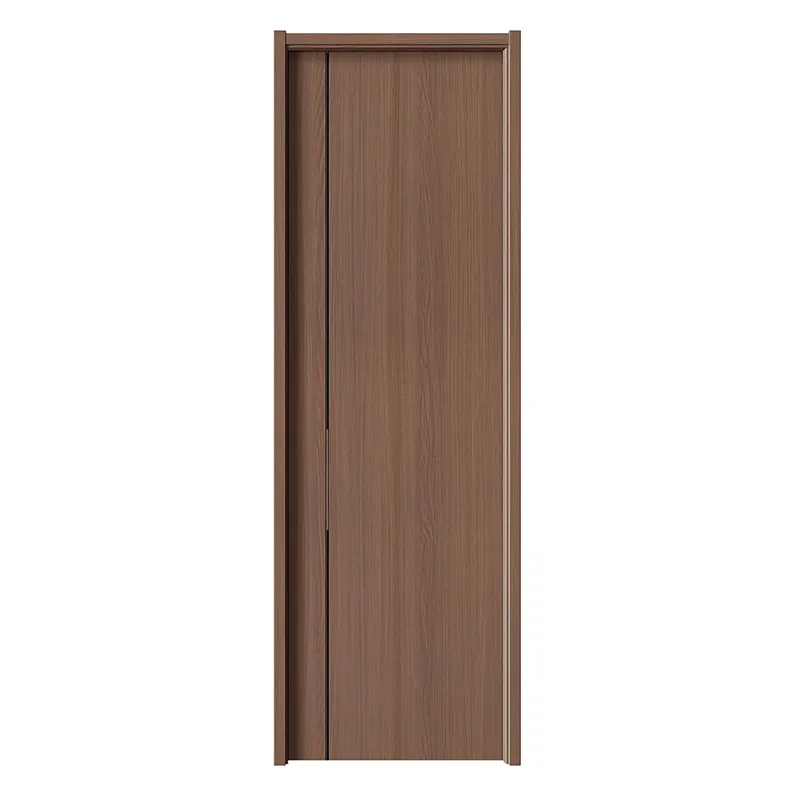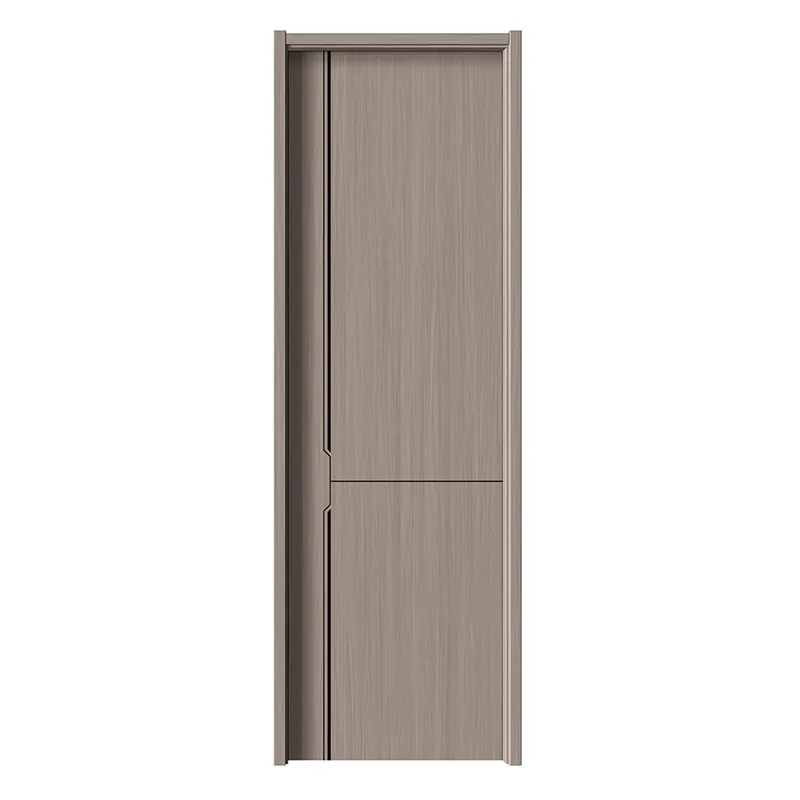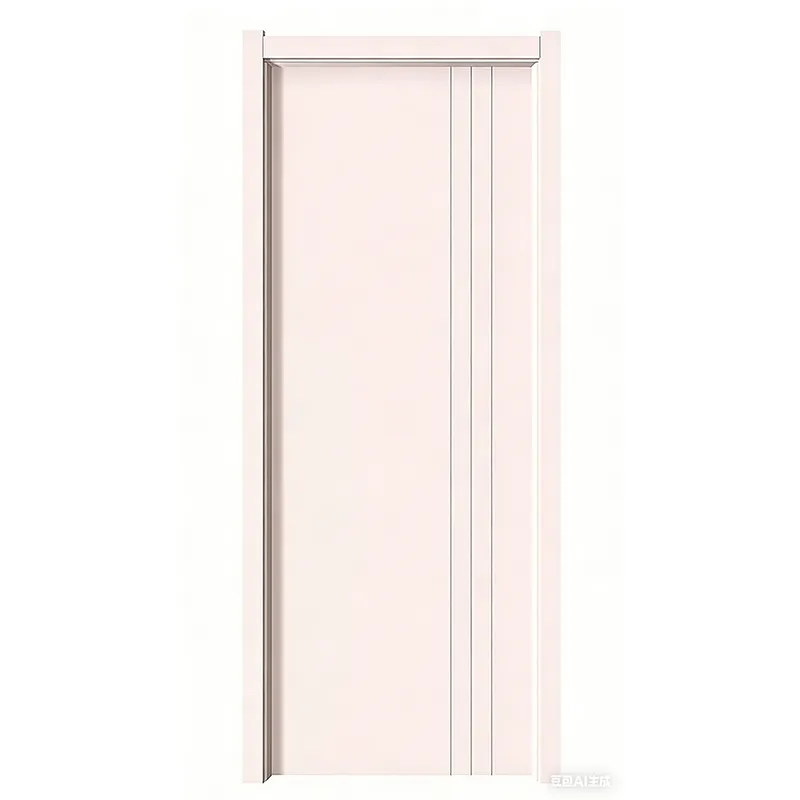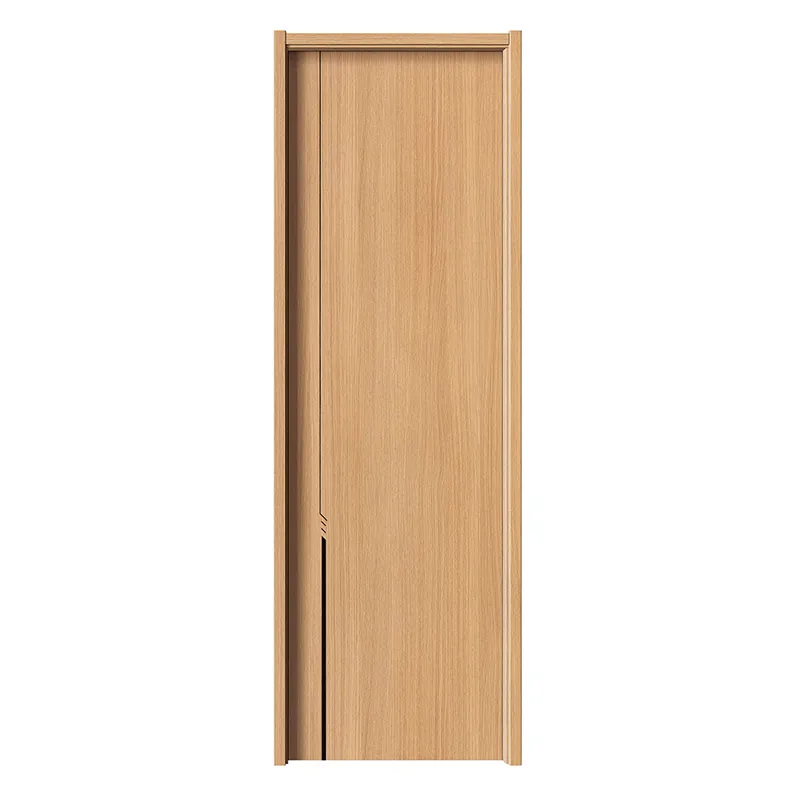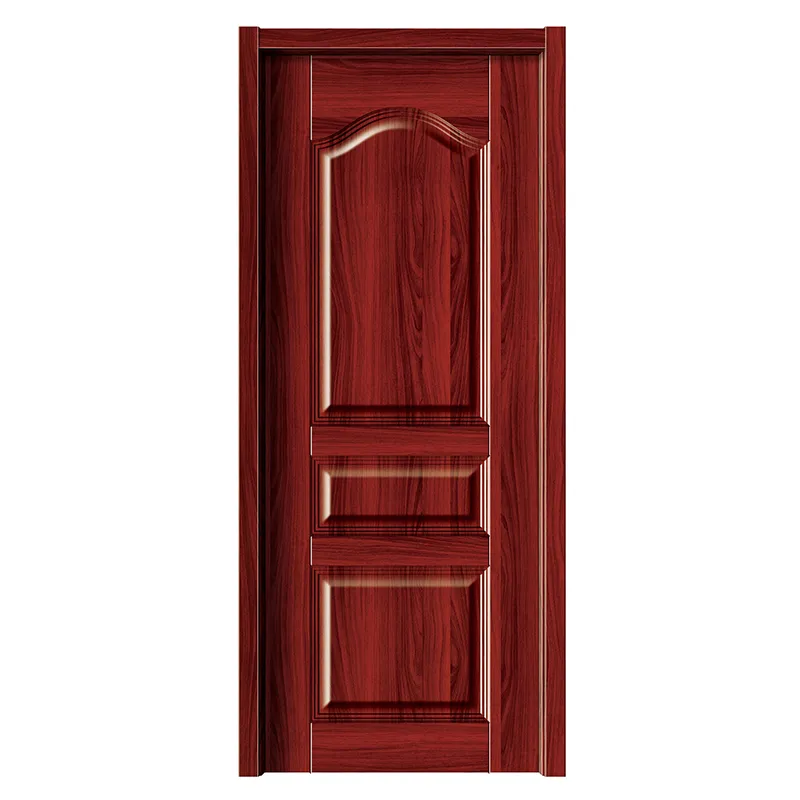



Blue wooden door
When a customer says “blue wooden door?”, a picture from a magazine immediately appears in the minds of many, even some of their colleagues: a perfect azure shade on an impeccably smooth solid wood. In practice, especially when working with international supplies, as we have withAnhui Wantai Woodworking Co.,Ltd, it all starts with the question: “Which blue one?” And this is not a quibble, but the first technical barrier. Sea wave, sky blue, faded denim - each shade behaves differently under varnish, ages differently and, critically, is perceived differently by the customer at the finish line. An error at the color approval stage is a guaranteed claim, extra logistics costs and reputational losses. I saw how a door, which the client saw in a catalog or on a monitor as “gentle blue?”, in the northern light in a Scandinavian interior turned into a cold, almost gray object. Therefore, our first step with the teamAnhui Wantai- not just send a RAL fan, but insist on sending physical samples-dies, processed with exactly the composition that will go into production. This is the same “precision” that they claim in their concept, and it is not here for the sake of a nice word.
Choosing a breed: not only about aesthetics
Here lies the second common myth. Many people think that color is a matter of paint alone. But the base - wood - makes a huge contribution. Try applying a translucent blue stain to pine and alder. Pine, with its pronounced yellow base, will produce a greenish tint that is rarely expected. For a rich, clean blue, especially one that needs to look ?solid? and modern, we need wood with a minimal intrinsic tonality and uniform texture. We often use beech or maple in these projects, which provide a neutral base.
In a production context likeAnhui Wantai Woodworking Co.,Ltd, this is a matter of discipline in the raw material warehouse. Their standard that they write about is not just a piece of paper. This means that for the "blue doors" party The blanks will be selected not only by moisture content (8-10%, this is mandatory), but also by visual uniformity of the fiber. Mixing pieces of wood with different densities in one product results in different paint absorption, which means spotting. I remember one early project, before strict protocols were developed, where such spotting only appeared after the final varnish was applied to the site. I had to remove the canvas and completely repaint it on site, which is several times more expensive.
And one more thing about the breed - stability. A door is not a picture on the wall. It is subject to changes in humidity, sometimes to direct sunlight. Soft rocks can “play” more strongly, which will lead to microcracks in the paint layer. Therefore, in the technical specifications we always specify not only the grade, but also the cut and the orientation of the fibers in the design of the fabric. These are the details that distinguish a product simply painted blue from a quality one.blue wooden door.
Dyeing technology: where durability lies
You can take the best paint and ruin everything at the preparation stage. Priming is a sacred ritual. The wood must not only be clean, but have a certain and uniform roughness for adhesion. A common mistake is to sand the primer after removing it in some places. Then, after a year or two, peeling will begin at these points.
Modern line as I have seenAnhui Wantai, usually involves dipping or spraying in a chamber followed by drying in convection tunnels. This gives uniformity. But for special shades, especially pastels or complex ones, like some blues, sometimes you have to deviate from the automation. For example, apply the first layer by hand to achieve uniform coverage without drips on the edges and panels. Their design team understands this and they have the flexibility for low volume or premium orders.
But the finishing coat - varnish or wax - is a different story. Gloss, matte, satin... For blue, the choice of finish changes the perception dramatically. A matte finish will make the color deeper, velvety, and hide minor unevenness. But it is less resistant to frequent contact, say, at the front door. Gloss is easier to clean, but it is merciless to scratches and emphasizes any imperfection in the base. We always discuss the operating scenario with the client before recommending the type of finish. There is no universal recipe.
Logistics and installation: invisible risks
It would seem that the door is made, packed, shipped. The hardest part is over? No matter how it is. The blue door is an object of increased attention during transportation. Any dent in the packaging may indicate a chip on the edge. We have switched to corner cardboard protective profiles and rigid spacers inside the box, especially for intercontinental shipments, which forAnhui Wantai- a common thing. Condensation inside the film during temperature changes is another enemy. It may leave stains on the varnish.
But the main problem is on-site installation. Incorrect installation will ruin all the factory's efforts. A skewed frame will cause the door to stick, and over time the paint and varnish on the end will wear off. Incorrectly installed hinges - the canvas will sag. We have even begun to provide simple graphic installation instructions on the packaging for complex orders, rather than relying solely on general standards. And we strongly recommend that customers use the services of trusted installers. It happened that a door that was perfect from the factory would come back to us with a complaint about the color, but in reality it turned out that when installing it, local workers simply scratched the end and “smeared it over.” its a different, similar but not identical paint from the hardware store.
That is why a global company striving toAnhui Wantai Woodworking Co.,Ltd, to meet diverse needs, must think not only about production, but also about post-sales support. The presence of clear manuals, warranty conditions and even a list of recommended materials for on-site adjustment (special wax, correction pencils for a specific color) is a sign of a mature player in the wooden door market.
Case: blue door in a country house near Moscow
I would like to give an example of one project that well illustrates the entire chain. Order -blue wooden doorfor the front entrance to a classic modern cottage. The client wanted a color “like the old shutters in Provence”, but with a modern matte texture. The first difficulty is choosing a reference. Photos from the Internet showed a huge scatter. We asked the customer for a sample of material (a piece of fabric, a tile) that suited him in color. They scanned it with a spectrometer and transmitted the data to the technologists at the factory.
Anhui Wantaiquickly made three test dies on the selected species (beech), with varying degrees of transparency of the coating. The dies were sent by courier to the client. He applied them to the facade of the house in different lighting and chose one option. Only after this the canvas and box were put into production.
The second difficulty arose during installation. The opening was old, skewed. The standard box didn't fit. Fortunately, we agreed on the possibility of custom sizes. Based on the measurements promptly provided by the installers, the factory manufactured additional elements and adjusted the geometry of the box. The door was installed with minimal gaps. The key was that the color for the extensions and the box was prepared in the same batch as the canvas, so color differences were excluded.
The result: a satisfied client and a photograph of this door, which now hangs in our portfolio as an example of an integrated approach. This is about the combination of aesthetics and practical characteristics that the company is talking about. Here it was not just a statement, but a sequence of actions: a deep consultation stage, production flexibility, solving emergency situations.
Instead of a conclusion: thinking out loud about trends
Now I see a request not just for color, but for history.Blue wooden door- this is often not just an element, but an emphasis, a statement. Clients are increasingly asking about the environmental friendliness of the compositions and the possibility of restoring the coating locally, after many years. This brings us back to the basics: quality of wood, quality of preparation, quality of application. Technologies change, new UV varnishes and tinted oils appear, but the foundation remains the same.
Working with suppliers such asAnhui Wantai Woodworking Co.,Ltd, which rely on accuracy and control of processes, allows you not to guess, but to predict the result. Their international standards are not just certificates for show, but, in fact, a common language in which we, the field specialists, and the factory can discuss technical details without the risk of being misunderstood. As a result, the customer receives not just a painted wooden panel, but exactly the door he had in mind - lively, warm, with character and, in our case, definitely blue.
And yes, after dozens of such projects, I still, when receiving a new request for a “blue door,” sigh internally and clarify: “Tell me in more detail, what do you see?” And this is the most correct first question in this work.
Correspondingproducts
Related Products